
Parent-Teacher Communication in Indian Schools: Why Most Approaches Fail
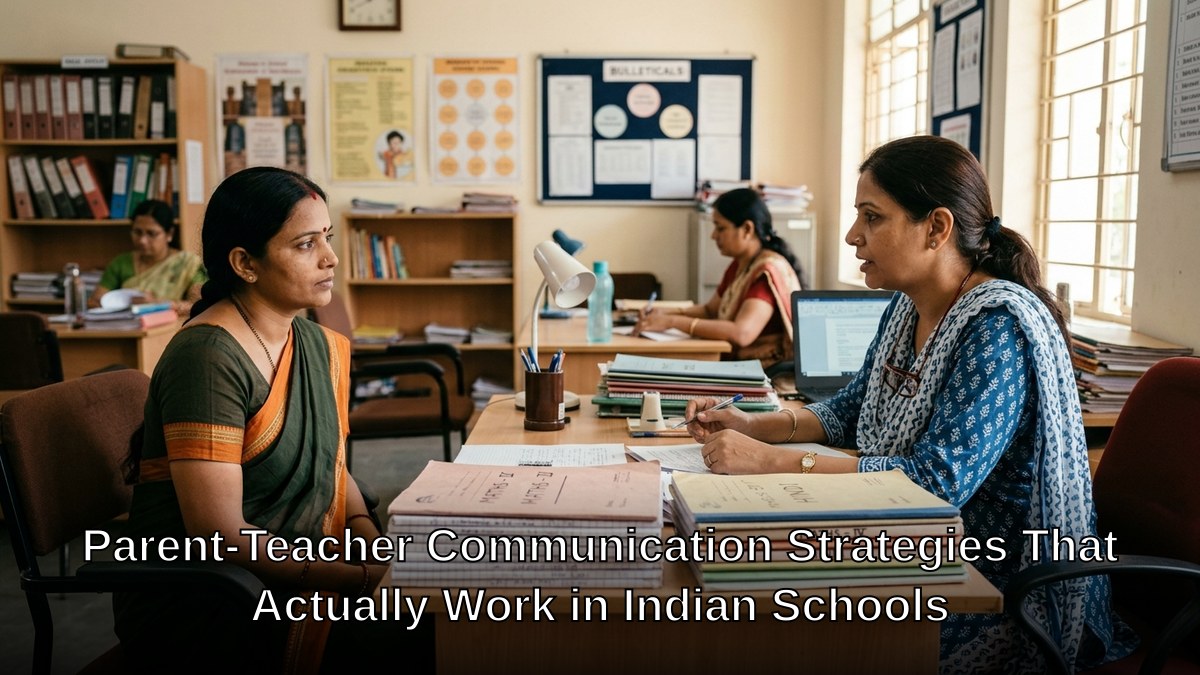
Here’s the truth: most parent-teacher communication in Indian schools happens once a year, during a rushed 5-minute meeting, and solves nothing. You sit across from the teacher. They hand you a report card. You nod. You leave. Nobody actually talks about what your child needs.
This broken system affects millions of Indian families. Whether you’re a homemaker managing your child’s education, a senior citizen helping grandchildren learn, or a tuition teacher trying to coordinate with schools, parent-teacher communication India remains stuck in the past. The gap between home and classroom keeps widening. Students suffer. Parents feel helpless. Teachers feel unsupported.
Let’s be honest: the problem isn’t that parents don’t care. It’s that nobody has built real systems for actual dialogue.
Key Takeaways
- Better parent-teacher communication in India means regular two-way contact, not one rushed five-minute meeting once a year with a report card.
- The old model has teachers talking at parents, language gaps between English-medium schools and home, and daytime meetings working parents cannot attend.
- Parents can take the lead by asking specific questions, keeping a written record and setting up WhatsApp or email updates with the teacher.
- Focusing on solutions and involving the child shifts the conversation from blame to a shared plan.
- A dedicated computer helps an educator keep student records, progress notes and messages organised instead of losing them in a personal phone.
Why Traditional School Parent Engagement Fails in India
Most Indian schools follow a colonial model. Teachers talk at parents. Parents listen quietly. Nobody asks questions. This approach worked when education meant memorizing textbooks. It doesn’t work now.
Here’s what actually happens:
- Parent-teacher meetings happen once or twice yearly, completely inadequate for real engagement
- Communication flows one direction: teacher tells parent grades, parent goes home
- Language barriers exist between English-medium schools and vernacular-speaking parents
- Working parents can’t attend daytime meetings at school
- Teachers have 40-50 students per class, making individual attention impossible
- No structured feedback system exists for continuous dialogue
Most people don’t realise that school parent engagement in India isn’t failing because parents don’t care. It’s failing because the infrastructure for real communication doesn’t exist. Teachers have no time. Parents have no access. Students fall through the cracks.
The result? Your child struggles in class. You find out months later. By then, they’ve already fallen behind.
What Teacher Parent Meeting Tips Actually Work
Stop waiting for schools to fix this. You need to take control of parent-teacher communication yourself.
1. Schedule meetings outside school hours. Don’t accept the standard 5-minute slot. Call the teacher. Propose a specific time. Evening meetings work better for working parents and senior citizens managing household schedules.
2. Come prepared with specific questions. Don’t ask “How is my child doing?” Ask “What specific skills is he struggling with in math? What can I do at home to help?” Vague questions get vague answers.
3. Document everything. Keep a notebook. Write down what the teacher says. Share what you’ve observed at home. This creates a real record, not just memories.
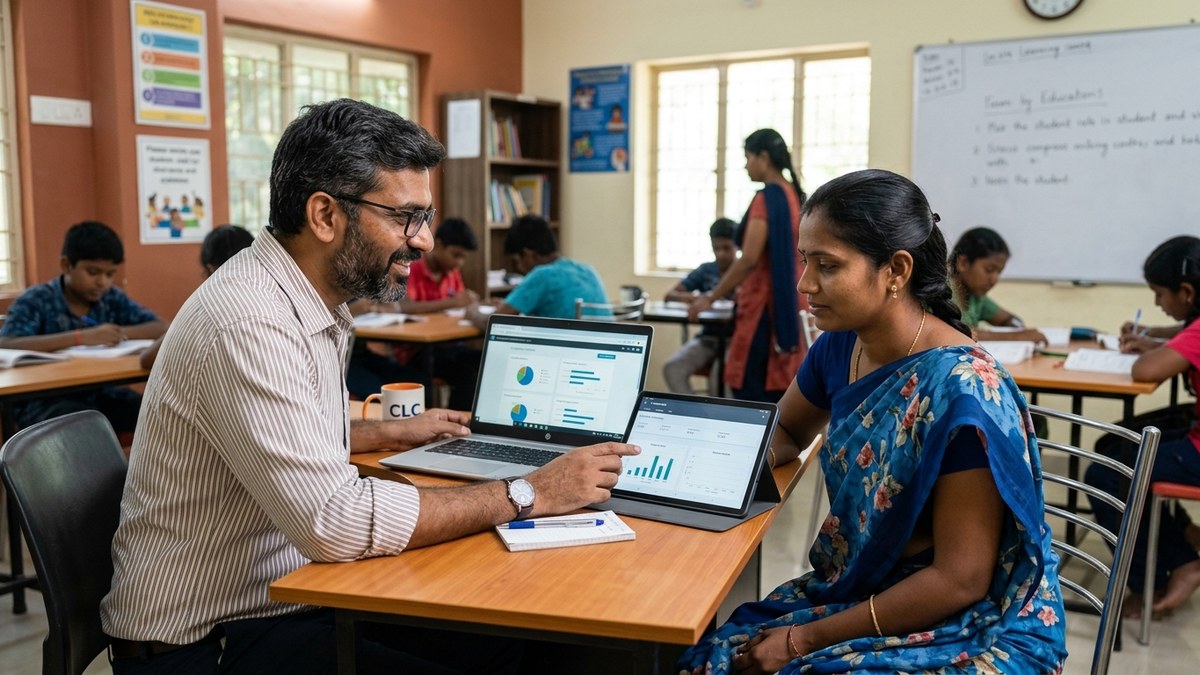
4. Use technology for continuous communication. WhatsApp groups, email updates, or dedicated learning platforms beat annual meetings. If your school doesn’t have this, push for it. If they won’t, create your own system with the teacher.
5. Focus on solutions, not complaints. Don’t say “My child hates your class.” Say “He’s struggling with focus. Can we work together on this?” Teachers respond to partnership, not criticism.
6. Involve your child in the conversation. Ask the teacher what your child’s strengths are. Build on those. This shifts the entire dynamic from problems to potential.
These aren’t fancy theories. They’re practical steps that work in real Indian homes and classrooms. Teachers appreciate parents who show up prepared. Students thrive when home and school actually communicate.
Building Real Parent Engagement Beyond the Classroom
Parent-teacher communication doesn’t have to stop at school gates. The strongest learning happens when education extends into the home and community.
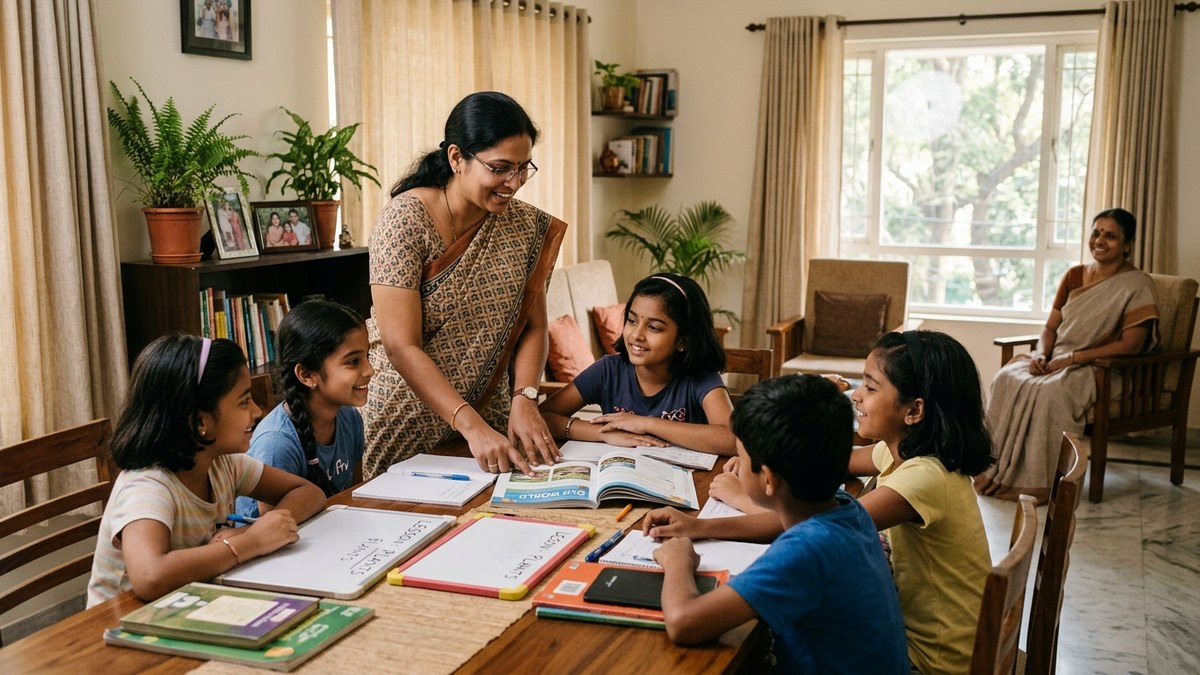
If you’re a tuition teacher, you’re already doing this. You see students one-on-one. You understand their gaps. You communicate directly with parents. This model works because it’s personal and accountable.
The same principle applies everywhere. When parents understand what’s being taught, they can reinforce it at home. When teachers know what’s happening outside school, they can adjust their approach. When students see adults talking about their learning, they take it seriously.
This is why community learning centres matter. They create spaces where educators, parents, and students interact regularly. No bureaucracy. No 50-student classrooms. Real dialogue happens. If you’re interested in this model, you can start a community learning pod and build this yourself.
For more on how communication skills develop in students, read our guide on communication skills for students.
The Technology Solution: Making Communication Seamless
You don’t need fancy software to improve parent-teacher communication India. You need reliable infrastructure that works consistently.
Many educators and parents struggle because they’re using their personal phones for everything. Interrupted chats. Lost messages. No record. This is chaos.
What you actually need is a dedicated system. A PC or laptop where you can maintain student records, share updates, schedule meetings, and keep communication organized. Not complicated. Not expensive. Just reliable.
This is exactly why APNA PC exists. It’s a complete bundle designed for Indian educators and learning entrepreneurs. Rs.30,000 gets you everything: education software, 3-year warranty, professional installation, plus a Mini PC with i3 7th Gen processor, 8GB RAM, 128GB SSD, monitor, keyboard, mouse, webcam, and headset. Everything you need to run organized parent-teacher communication, manage student progress, and build a real learning operation.
Whether you’re running a tuition centre, managing a school, or coordinating with your child’s teachers, APNA PC gives you the infrastructure to communicate properly. No more chaos. No more lost information. Just organized, professional, reliable systems.
Your Next Step
Stop accepting broken parent-teacher communication. Start building real systems today.
If you’re an educator or someone interested in creating better learning spaces, start a microschool in India or community learning pod. Build the communication systems you need. Create the engagement that actually works.
For context on how schools operate, check School on Wikipedia. For official education standards in India, visit the India Ministry of Education.
Ready to transform how education happens in your community? Start your learning pod today and build parent-teacher communication that actually works.
Frequently Asked Questions About Parent-teacher communication in India
How can parents improve communication with teachers in India?
Ask for a meeting outside school hours, come with specific questions about particular subjects and skills, and write down what is agreed. Set up a simple channel like a WhatsApp or email thread for short updates between meetings. Keep the tone a partnership, focused on what to do next rather than complaints.
Why is parent-teacher communication so weak in Indian schools?
Classes of forty to fifty students leave teachers no time for individual updates, meetings happen once or twice a year, and many parents cannot attend daytime slots or follow English-medium reports. There is usually no system for continuous feedback, so problems surface months late.
What questions should I ask at a parent-teacher meeting?
Ask which specific topics your child struggles with, what that looks like in class, and exactly what you can do at home to help. Ask about strengths too, so you can build on them. Avoid vague questions like how is my child doing, which get vague answers.
Are WhatsApp groups good for parent-teacher communication?
They help for quick reminders and notices, but important updates get lost in busy groups. A better setup is a short direct channel between the teacher and each parent, plus organised records the educator keeps on a computer rather than a personal phone.
How does a learning pod improve parent engagement?
A small community learning centre has far fewer students per educator, so parents get regular, specific updates and can meet in person without bureaucracy. That regular contact lets home and the classroom reinforce the same work.
Under India’s Right to Education Act, government and aided schools must form School Management Committees in which three-quarters of members are parents, giving families a formal role in how the school runs.