
The Learning Centre Gold Rush Nobody’s Talking About
Here’s the truth: India’s digital skills gap is creating a massive opportunity for anyone willing to start a learning centre for digital skills. Not tomorrow. Now. While most people are still debating whether online education works, smart educators are already building thriving learning centres in their neighbourhoods, earning solid income, and genuinely changing lives.
You don’t need a fancy office or a huge investment to launch a digital learning centre. You need clarity, the right tools, and honest answers to three questions: Who will you teach? What will you teach them? How will you make it sustainable?
Let’s be honest: most people fail at this because they overthink it. They wait for perfect conditions that never arrive. The winners? They start small, stay focused, and scale when they see real results.
Why Start a Digital Learning Centre Now?
Most people don’t realise how desperate the demand is. India has over 400 million people still lacking basic digital literacy. Schools are overwhelmed. Online courses feel impersonal. Parents want their kids learning from someone they can trust, in a space they can visit, with hands-on support.
This is where your learning centre wins. You become that trusted local educator. You’re not competing with big platforms. You’re filling a gap they can’t reach.
The numbers back this up:
- Rural India has 65% digital illiteracy rates
- Homemakers represent 150 million potential learners wanting skill upgrades
- Schools desperately need coding and digital literacy programs
- Corporate employees need upskilling in emerging technologies
Your learning centre can serve any of these audiences. The barrier? It’s not money or expertise. It’s knowing where to start.
The Three-Part Blueprint for Your Digital Learning Centre
Part 1: Choose Your Location and Audience
You can run a digital learning centre from your home, a rented community space, or even partner with existing institutions. The location matters less than accessibility. Can your students reach you easily? Is there foot traffic or word-of-mouth potential?
Pick your first audience ruthlessly. Don’t try to teach everyone. Start with one group: school kids wanting coding skills, homemakers learning office software, or village youth preparing for digital jobs. Master one audience first. Expand later.
Part 2: Get the Right Technology Setup
This is where most people get stuck. They think they need expensive computers and complicated software. Wrong. You need reliable hardware and proven educational software that actually works offline (because internet in India isn’t always stable).
The APNA PC bundle solves this completely. It’s Rs.30,000 for a complete package: education software pre-loaded, 3-year warranty, installation support, and a Mini PC with i3 7th Gen processor, 8GB RAM, 128GB SSD, monitor, keyboard, mouse, webcam, and headset. Everything you need to start teaching digital skills on day one.
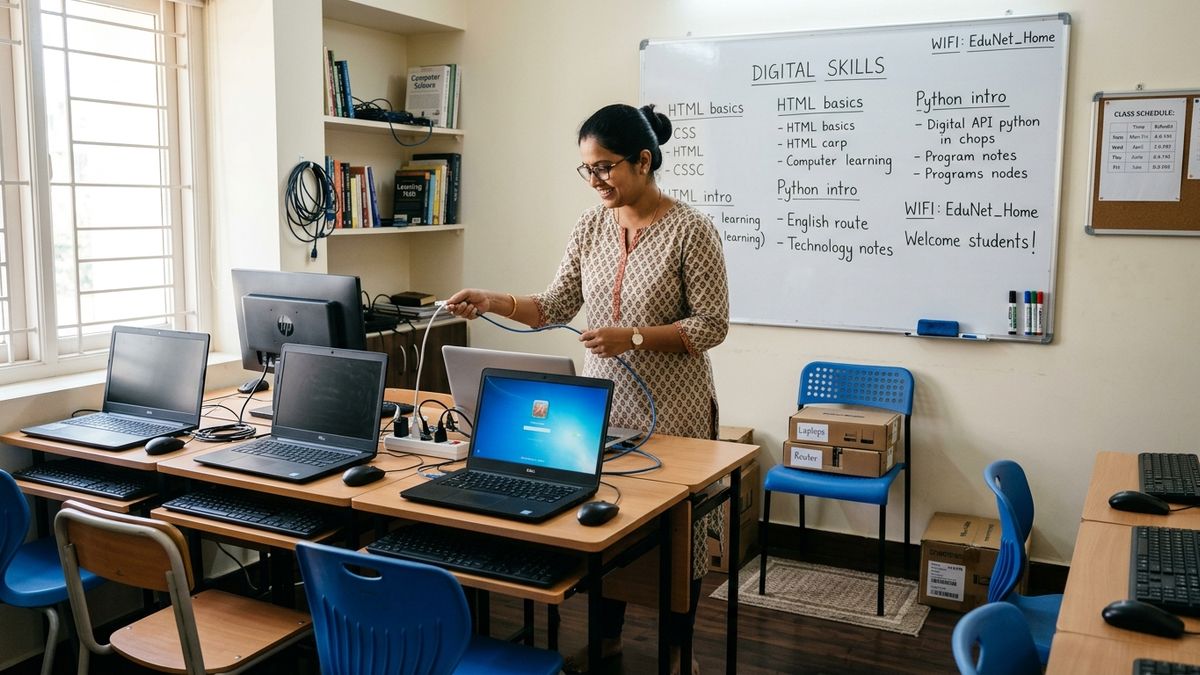
One APNA PC can serve 15-20 students rotating through sessions. Two units mean you’re running a proper learning centre. Three units and you’re scaling.
Part 3: Build Your Teaching Model
You don’t need to be a tech expert to run this. You need to be a good teacher. The software handles the technical content. You handle the human connection, motivation, and progress tracking.
Structure your days simply: morning batches for school kids, afternoon for working professionals, evening for homemakers. Each batch gets 1-2 hour sessions. Charge Rs.500-1,500 per month depending on your location and audience. With 20 students per batch and three batches daily, you’re looking at serious income.
What Makes a Learning Centre Actually Succeed?
Successful centres share three traits. First, they focus on outcomes. Parents don’t care about fancy websites. They care whether their child actually learns to code or use Excel. Show results and word-of-mouth explodes.
Second, they stay consistent. You show up every day. Same time, same place, same quality. Reliability builds trust faster than anything else.
Third, they integrate with existing systems. Connect with schools for corporate training partnerships. Link with DIKSHA digital learning platform for government-backed content. Align with India Ministry of Education initiatives to access grants and recognition.
You’re not fighting the system. You’re becoming part of it.
The Real Numbers: What You’ll Actually Earn
Let’s skip the fantasy projections. Here’s what a modest learning centre actually generates:
- Setup cost: Rs.30,000-50,000 (APNA PC bundle plus basic furniture)
- Monthly students: 30-50 across three batches
- Average revenue per student: Rs.800/month
- Monthly income: Rs.24,000-40,000
- Break-even: 1-2 months
- Year one profit: Rs.2-4 lakhs (after expenses)
These aren’t theoretical numbers. These are real results from educators running PODs (Points of Digital Learning) across India right now.
Start small. Scale based on demand. Your first year is about proving the model works in your location. Year two is about expanding your batches and adding services.
Your First 30 Days: The Action Plan
Stop planning. Start doing.
- Week 1: Identify your location and target audience
- Week 2: Order APNA PC bundle and set up your space
- Week 3: Create simple marketing (WhatsApp messages, local posters, word-of-mouth)
- Week 4: Enroll your first 10 students and run your first batch
That’s it. You don’t need a business plan written in triplicate. You need customers and the ability to serve them well.
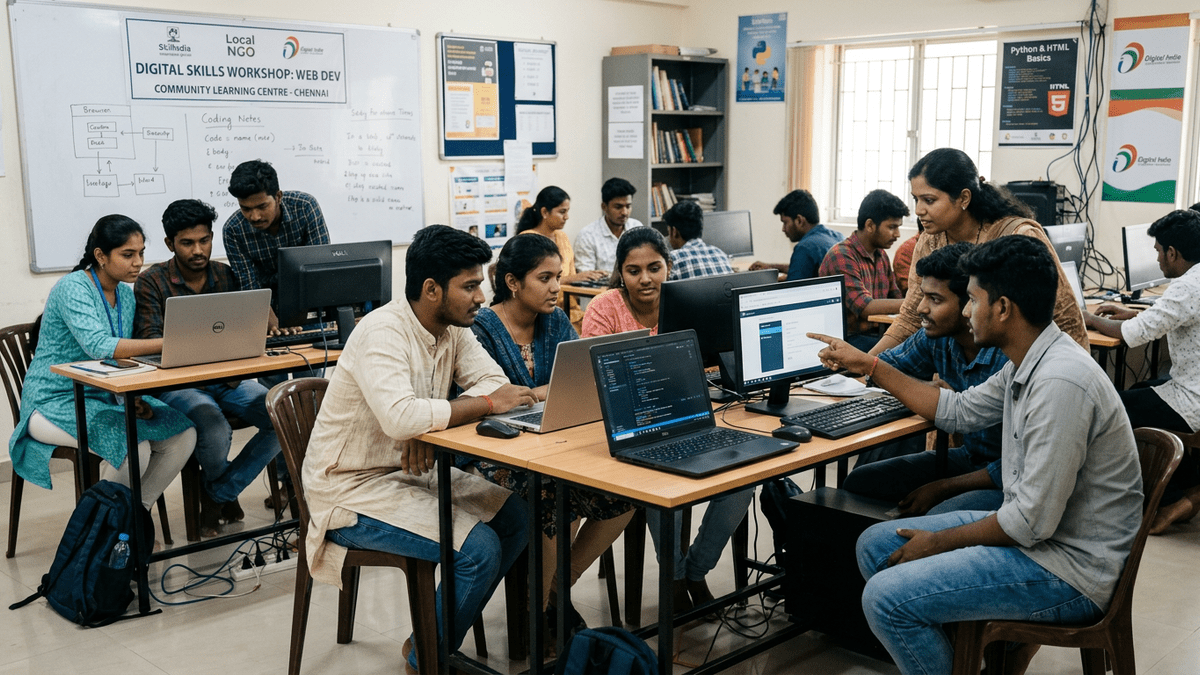
A community learning centre creates real impact while generating steady income for educators
Consider setting up a digital literacy centre in your village or building a smart classroom at home as your starting point. Both models work. Both are proven.
Why Most People Won’t Do This
Most people reading this will do nothing. They’ll think about it, research it endlessly, wait for the “right time,” and eventually forget about it. That’s normal. That’s also why there’s so much opportunity left.
The people who win are the ones who start with imperfect information and learn as they go. They order the equipment. They find their first students. They iterate and improve.
Your learning centre doesn’t need to be perfect on day one. It needs to exist and serve real people. Everything else follows.
Start your learning centre today. The demand is real. The opportunity is now. The only question is whether you’ll seize it.